My own business · WP Hammer
Routine work landing on senior staff
More work done. Fewer requests to send.
We thought we needed another person. So we asked what that person would actually do all day, read 12–18 months of past requests, and turned the routine work into tools the team uses itself.
An in-house platform at CodeMountain, one of my businesses.
What changed · Routine server work
Before: we planned a new role to keep over 40 servers running: monitoring, updates, security checks and backups. After: by my estimate, the platform covers 85–90% of that planned work, and the team handles routine requests itself.
How I measured this
01 The friction
We thought we needed another person.
At CodeMountain, we had over 40 servers hosting client websites and applications. Monitoring, updates, security checks, backups: keeping everything running was becoming a job of its own.
We started looking for someone to take care of it. Finding the right person was difficult, and the cost was becoming hard to absorb. Meanwhile, the team still needed sites copied, backups made and test environments prepared.
Each of those tasks went to the same few senior people, one request at a time. Asking, waiting, explaining: the work moved at the speed of whoever was free.
So we took a closer look at the job: what, exactly, would this person do all day?
02 The change
The feature list was already in our inbox.
We reviewed 12–18 months of emails and requests from our client management team to senior technical staff, pooled them and looked for the ones that kept coming back.
What kept coming back
- Copy this site
- Secure that one
- Make a backup
- Restore an earlier version
- Prepare a test site
We broke the work into procedures: what needed checking, when it should happen, and the steps behind each recurring request. Before building, we brought in a senior DevOps specialist on contract to validate our workflows and help improve them. DevOps is the work of keeping software and the infrastructure it runs on working together.
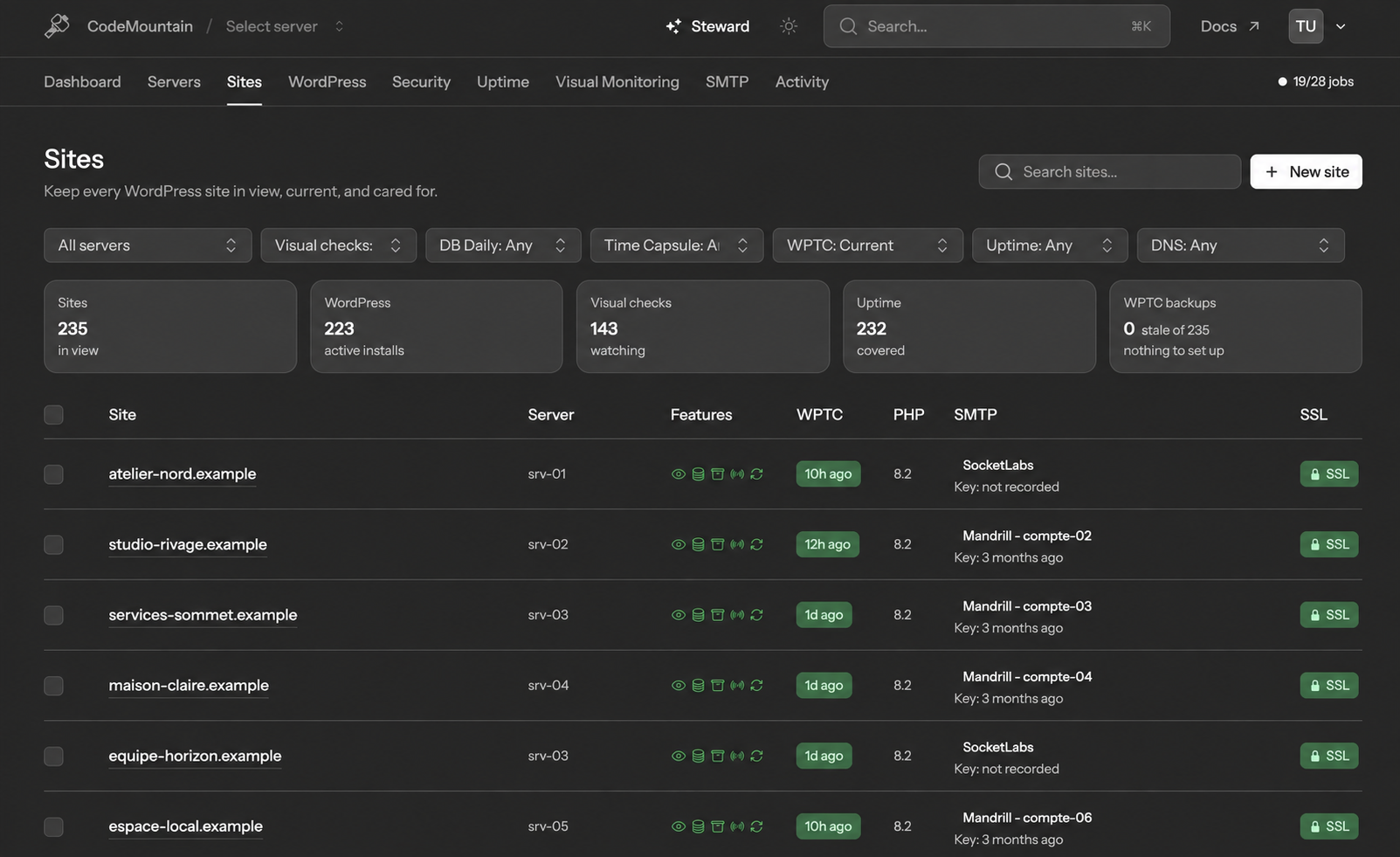
That expertise gave us a sounder basis for automation. The repeatable procedures and checks became WP Hammer, our in-house operations platform built on Laravel Forge, a service for managing web servers. Scheduled jobs look after routine monitoring and maintenance across servers and sites.
Each recurring request became a defined workflow and an action the team could trigger itself. We used their words for those actions, the same language they were already using to ask for help. The platform offered familiar tasks they had already shown they needed.
Forge, then Hammer. The name more or less picked itself.
03 Simpler work
The team can get on with it.
Need a copy of a site to test a change? The team can create a staging site, a separate version for trying things before touching the live one, without handing the request to another person.
What runs on its own schedule
Scheduled checks
- Servers
- Websites and their updates
- Backups
- Security
The platform also brings together site cloning, backups and restoring earlier versions. Routine server, website, update and security checks run on their configured schedules. Less asking, less waiting, less remembering to check again.
A built-in chat assistant lets the team ask what a task will affect before running it.
04 The result
Routine work covered. Judgment still matters.
How I measured this My estimate, in our setting, of how much of the planned work the platform now covers: not hours or costs saved, and not a promise for another business.
Before hiring, outsourcing or buying another tool, describe the work you need done.
- 40+ servers hosting client websites and applications
- 12–18 months of past requests, read before building anything
- 85–90% of the work we had planned to hire someone for, now covered by the platform
The team can handle everyday requests itself, and routine checks no longer depend on someone going through the same list by hand. Exceptions, changes to the procedures and decisions that need experience still call for people.
The work became easier to show, too.
We had started by making our own work easier. Along the way, the platform gave us a place to bring together a wider set of monitoring, backup and verification tools, including checks for signs that a site had been altered by a hack.
That created an unexpected benefit in our customer communications. We could show concrete pieces of the maintenance work and the schedule behind them: what we were doing to protect their sites, keep them working and look after them over time. Work that had been largely invisible became easier to explain as part of the service they were paying for.
Which parts of the job need someone’s judgment? Which follow a repeatable procedure? Which could your team handle with the right tools? That is where this project started.
Is routine work piling up on your most experienced people? Let’s talk